Wonderful video by Project Yosemite, accentuated by M83’s epic “Lower Your Eyelids to Die With the Sun” from Before the Dawn Heals Us.
Yosemite HD II from Project Yosemite on Vimeo.
Wonderful video by Project Yosemite, accentuated by M83’s epic “Lower Your Eyelids to Die With the Sun” from Before the Dawn Heals Us.
Yosemite HD II from Project Yosemite on Vimeo.

The universe is a pretty amazing place, isn’t it? Every once in awhile, the sky clears above Chicagoland, sweeping away the smog and pesticide haze. Usually it’s the cold weather that does it. This photo would not have been possible if the temperature didn’t plummet that evening. The best part about solar events is that for one evening, everyone forgets about their daily paths and stares up in wonder collectively at all that is, and all that will ever be. There’s something sweet and humbling about that.
Click on the image for a much bigger version.
I’m pleased to announce that my exoplanet biological research story, “Divinity” has been purchased for publication by Perihelion Science Fiction. This is my fourth sale to Perihelion, and I’m thrilled to be working with editor Sam Bellotto Jr once more.
I’ll post a release date as soon as it becomes available.
Don’t fall for it. What you’re clicking on is known as “link bait”. It’s a clever (or not so clever depending on how you look at it) way to trick you into visiting web sites by clicking links. Even professional news organizations are starting to implement these schemes.
Animals are not leaving Yellowstone. In fact, in the viral footage, the bison are actually entering the park. Besides, they use the roads every day. This is nothing new.
Yes, if the Yellowstone super volcano explores, we’re all screwed. The effects would be nothing like we’ve ever seen before. It’s a very real and serious concern. However, don’t be taken in by sensationalistic elements.
You might be surprised to learn that a certain animal is heading to Yellowstone National Park: the osprey. Fresh from their wintering grounds in South America, the ospreys should begin making their way at any moment back to the shores and lakes of the north country. They have great taste in where they build nests and breed.
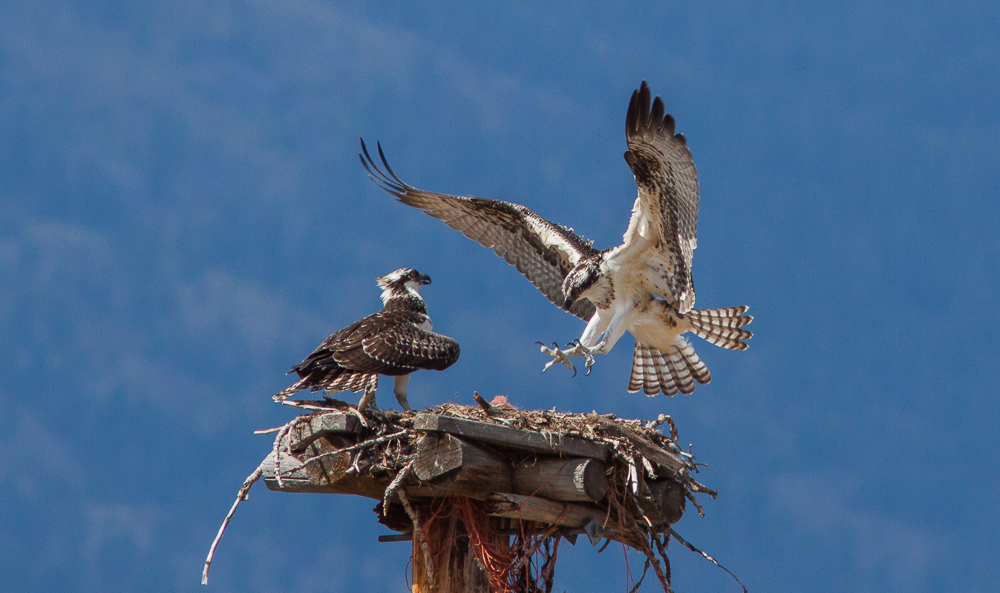
Welcome back, weary travelers.
Great new song from M83. I have no idea what the movie is about. Have yourself a listen:
